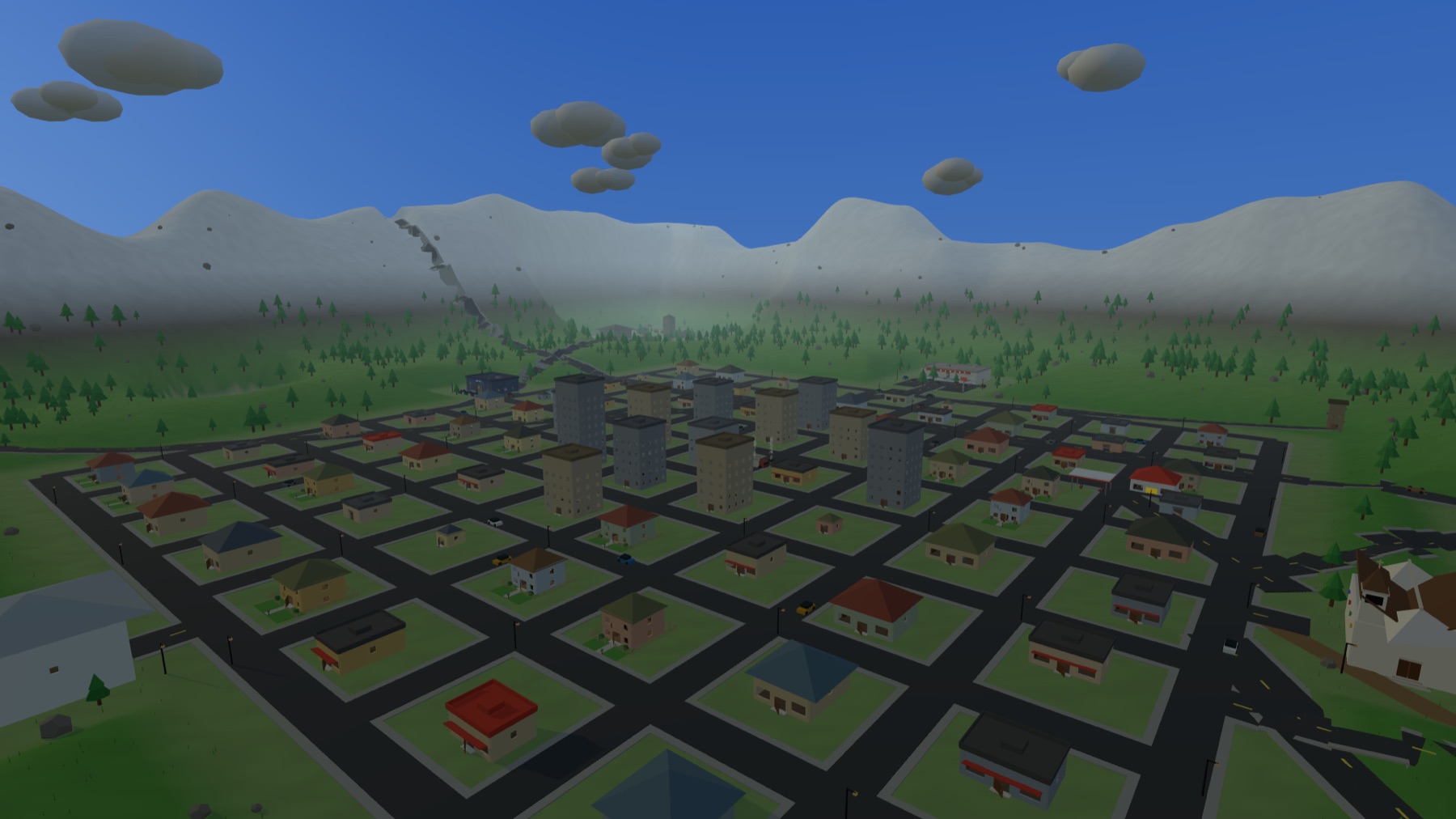
No download, no plugin, no account required. You open the page and you're
already in an open world 900 × 900 metres across, hungry, thirsty,
surrounded by other players and a clock that never stops.
day/night cycle
10 min
players per room
16
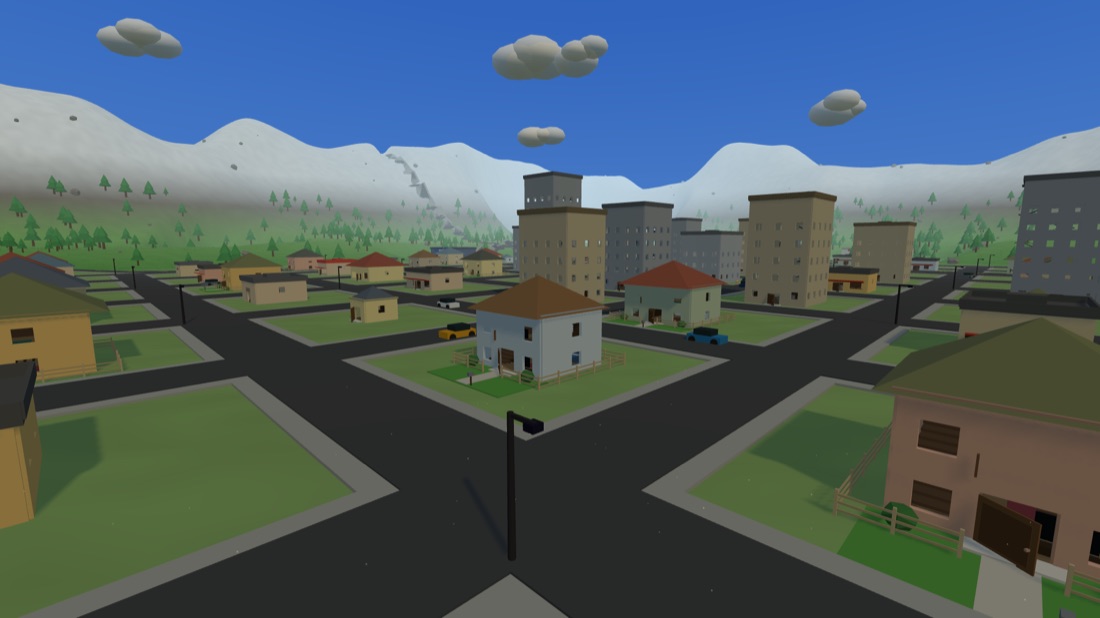
buildings downtown
83
zombies per round
225+60% at night
IM GONE is a post-apocalyptic first-person survival game that runs entirely
in the browser. You wake up in the middle of a procedurally generated map
with almost nothing in your hands, and from there the only rule is to keep
breathing.
There is no quest. There is no tutorial. There is a city full of buildings to
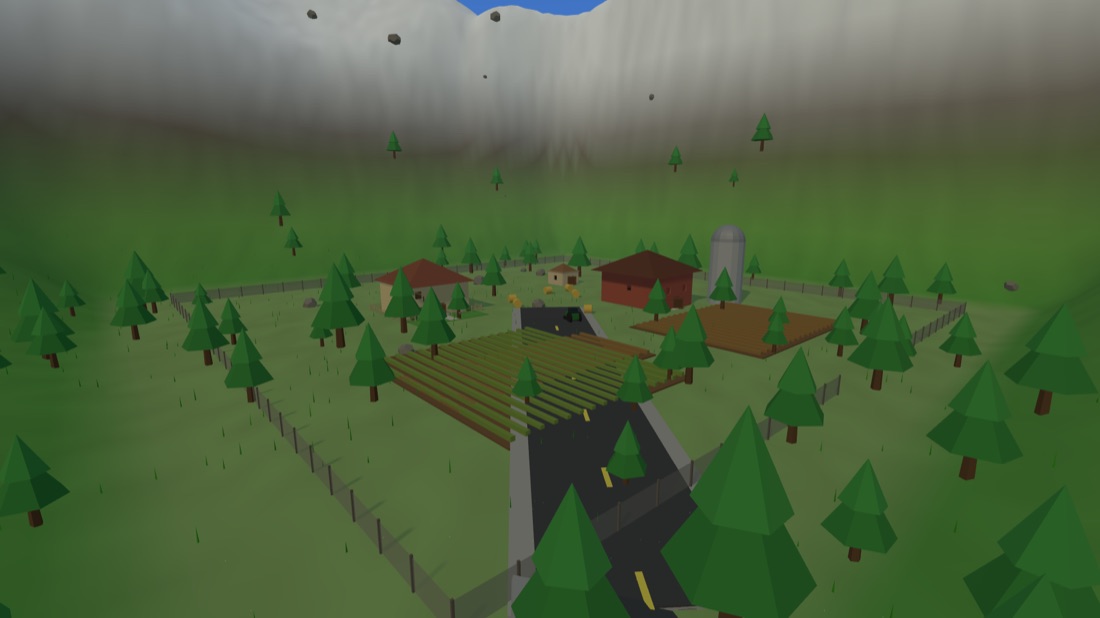
pick through, a military base with the good gear, a farm, a hospital, an
airport — and between you and any of those, kilometres of forest, a river,
and things that used to be people.
This dev log describes the game as it stands today. Every number came out of
the code, and every image was rendered by the game's own engine.
06:12 · sunrise
The noise
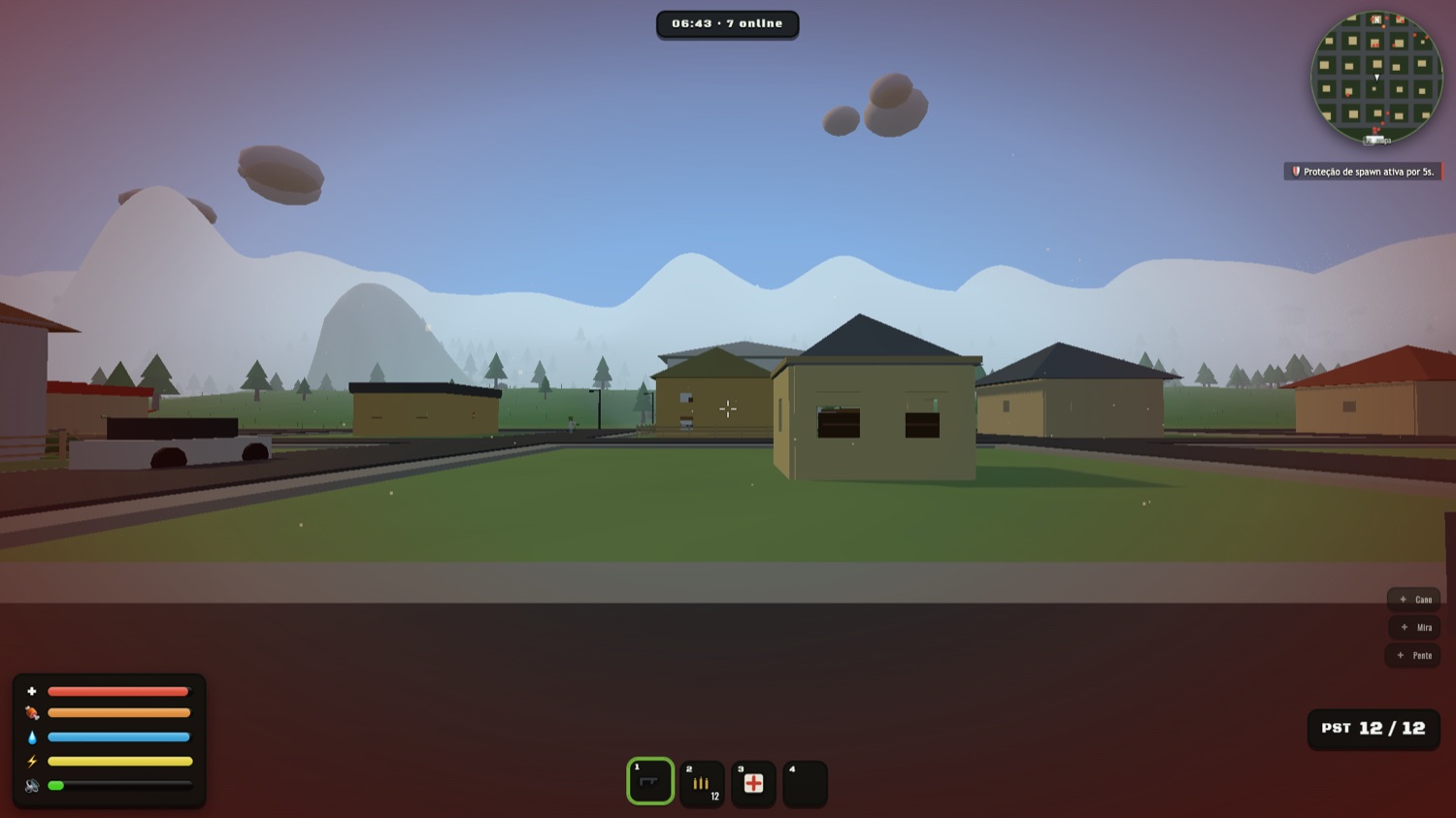
You spawn somewhere on the map with a pistol, 12 rounds and a bandage. The
four bars in the corner start draining immediately: health, hunger, thirst,
stamina. The fifth bar matters most, and nobody notices it at first.
Running is loud. Crouch-walking is almost silent. Firing is very loud. And
sound ignores walls: zombies head straight for it and keep searching for
9 seconds around the spot where they think they heard something.
The full HUD. The bottom bar, the green one, is the noise meter.
08:20 · morning
Scavenging
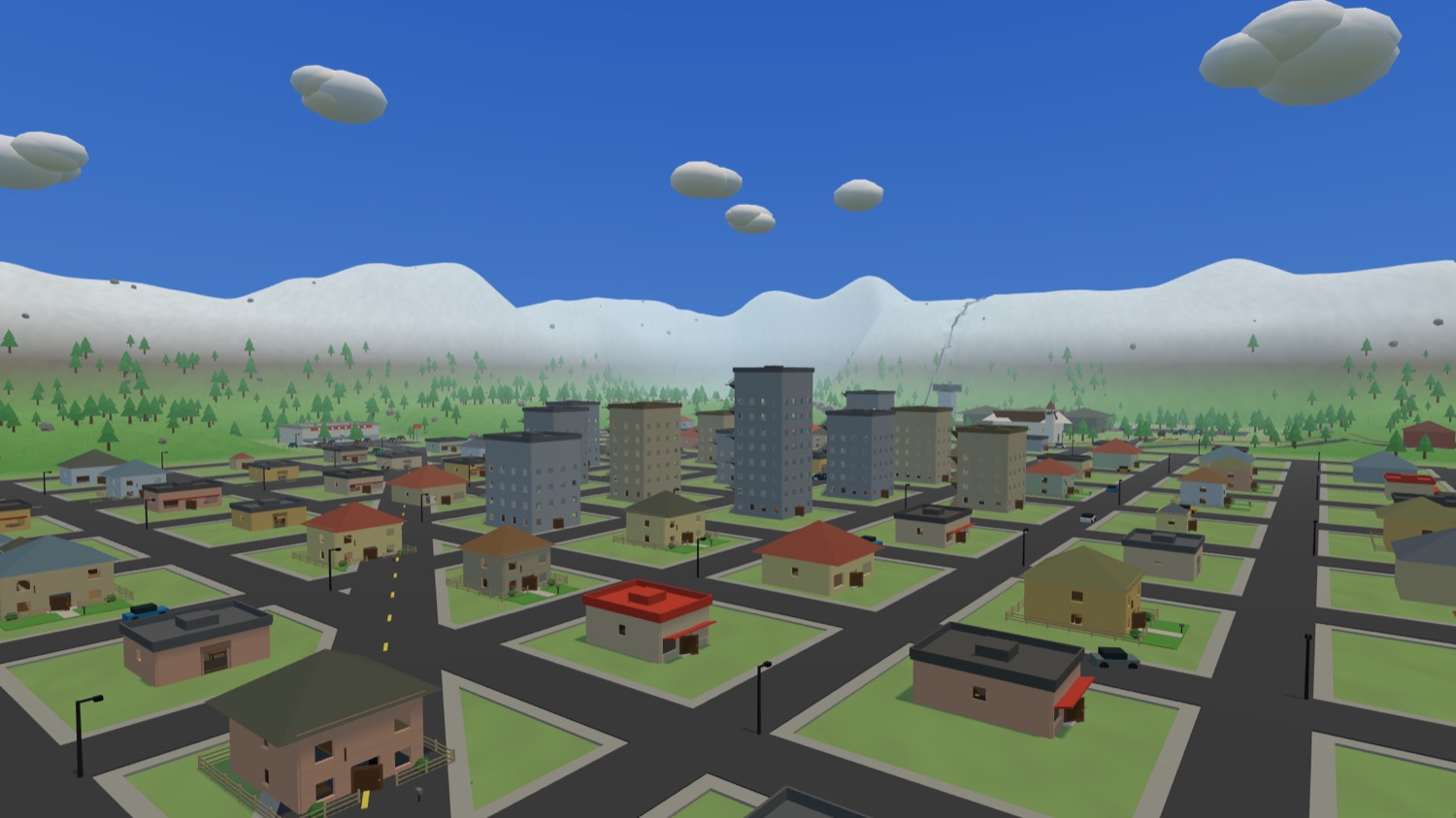
Every building downtown has a real interior — rooms, furniture, stairs, a
second floor you can climb to and shoot from. Loot points are scattered
through them and refill every two and a half minutes.
What you find depends on where you look. Suburban houses give food and
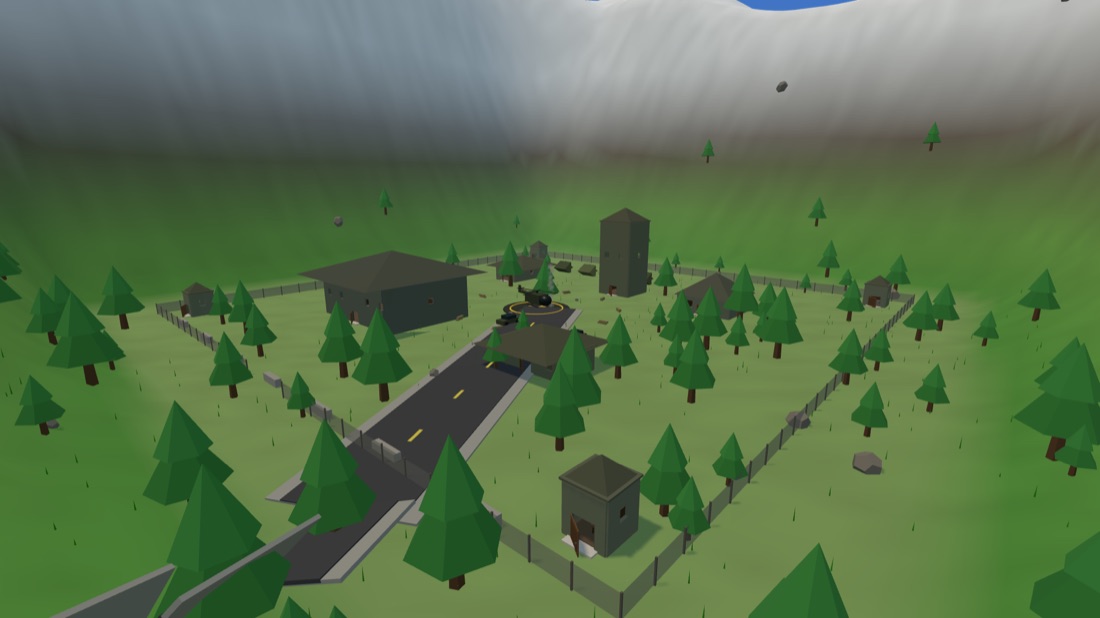
bandages. The police station gives pistols and vests. The military base gives
AK‑47s, M4s, scopes and 7.62 ammunition — which makes it the most
dangerous place on the map, because everyone knows.
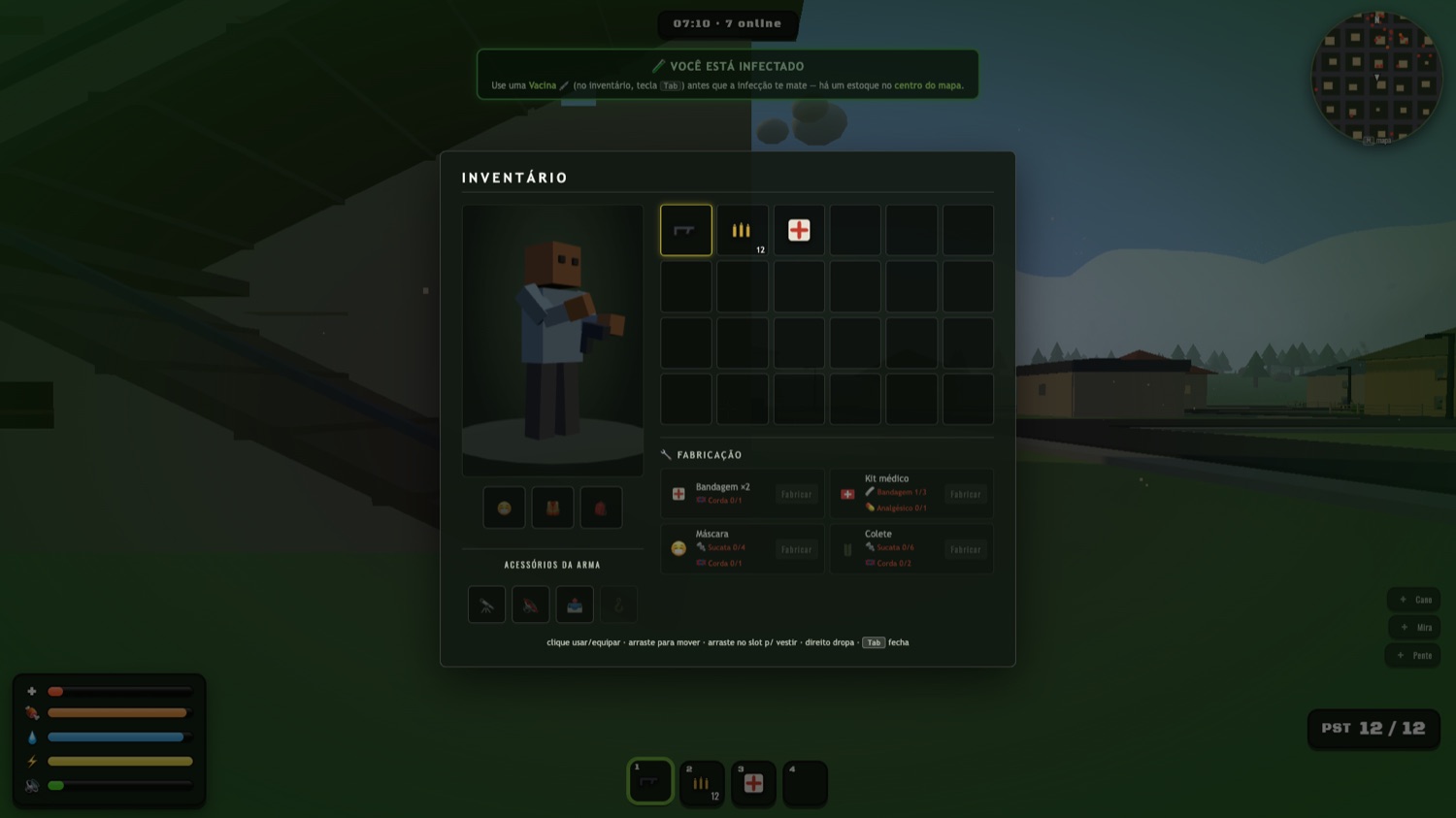
The inventory goes up to 24 slots, but you start with far fewer — a
large backpack fixes that. There's crafting too: rope becomes a bandage, a
bandage plus painkillers becomes a medkit, scrap and rope become a vest or a
mask.
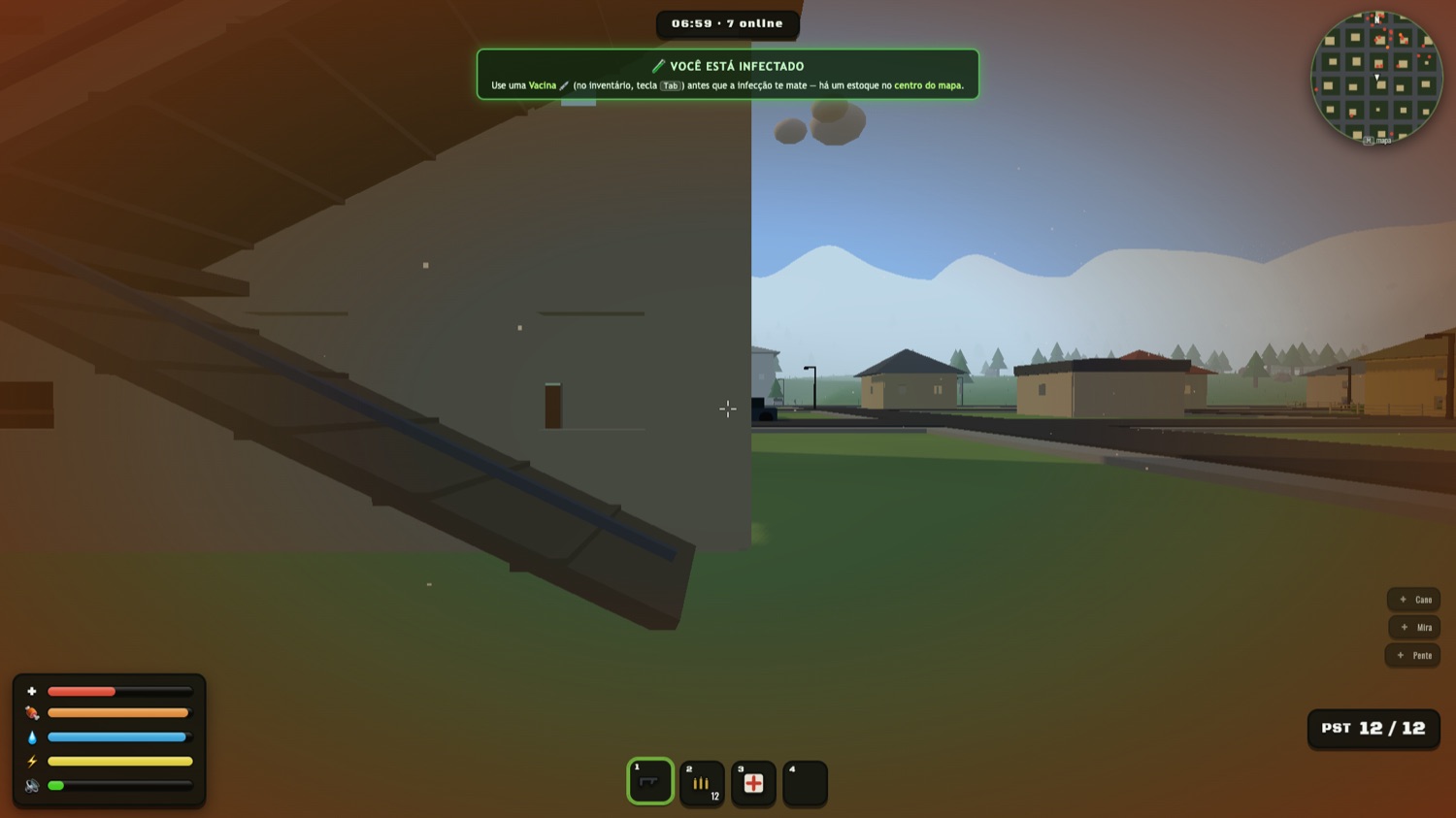
Inventory, gear, weapon attachments and crafting on one screen. Up top, the infection warning.
10:05 · morning
The arsenal
Seven lethal weapons, each with a clear job.
Values read straight out of shared/items.js
Weapon
Damage
Range
Mag
Ammo
Sniper
130
320 m
5
7.62
Axe
52
2.8 m
—
—
AK-47
36
120 m
30
7.62
Pistol
32
95 m
12
9 mm
Knife
30
2.2 m
—
—
M4
29
110 m
30
5.56
Mossberg 500
13 × 8
34 m
8
12 gauge
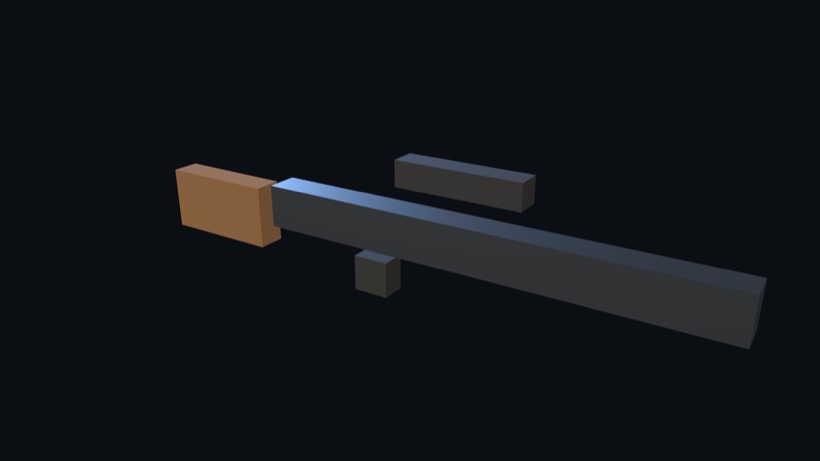
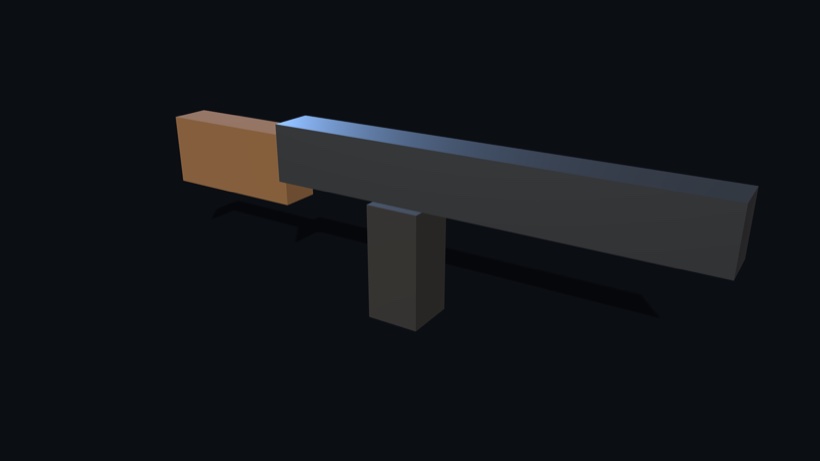
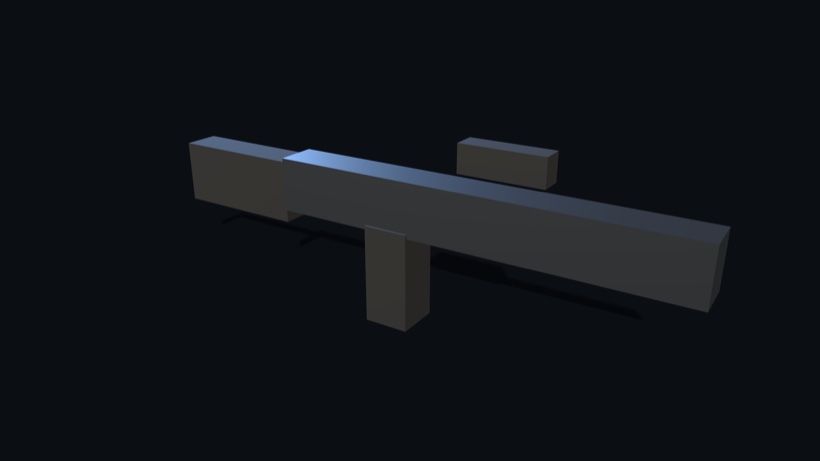
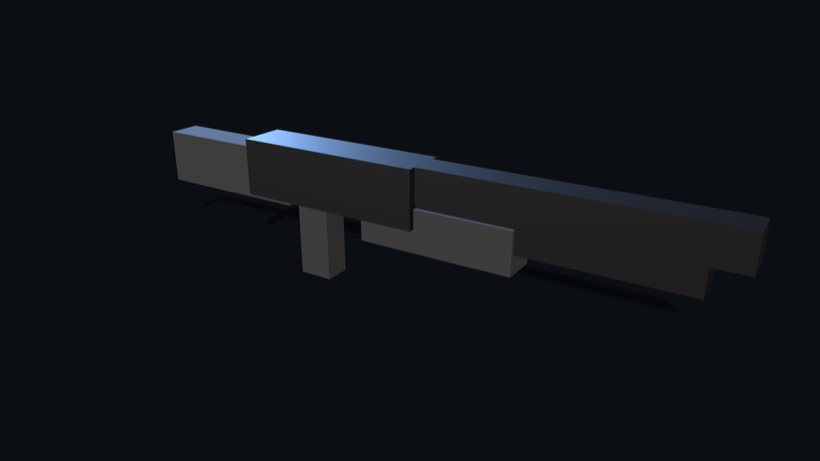
SniperAK-47M4Mossberg 500PistolAxe
Five attachments change how a weapon behaves: a suppressor (which
shrinks the noise radius of every shot), a red dot, a 4x scope,
an extended mag and a foregrip. The sniper and the scope open a
full-screen telescopic sight. The red dot keeps the gun on screen and hides
the HUD crosshair — you aim through the actual red dot.
There's also a ballistic shield you can plant in the ground as one-way cover:
it blocks incoming fire from the front and lets you shoot straight through it.
Plus grenades and binoculars.
13:40 · afternoon
The car
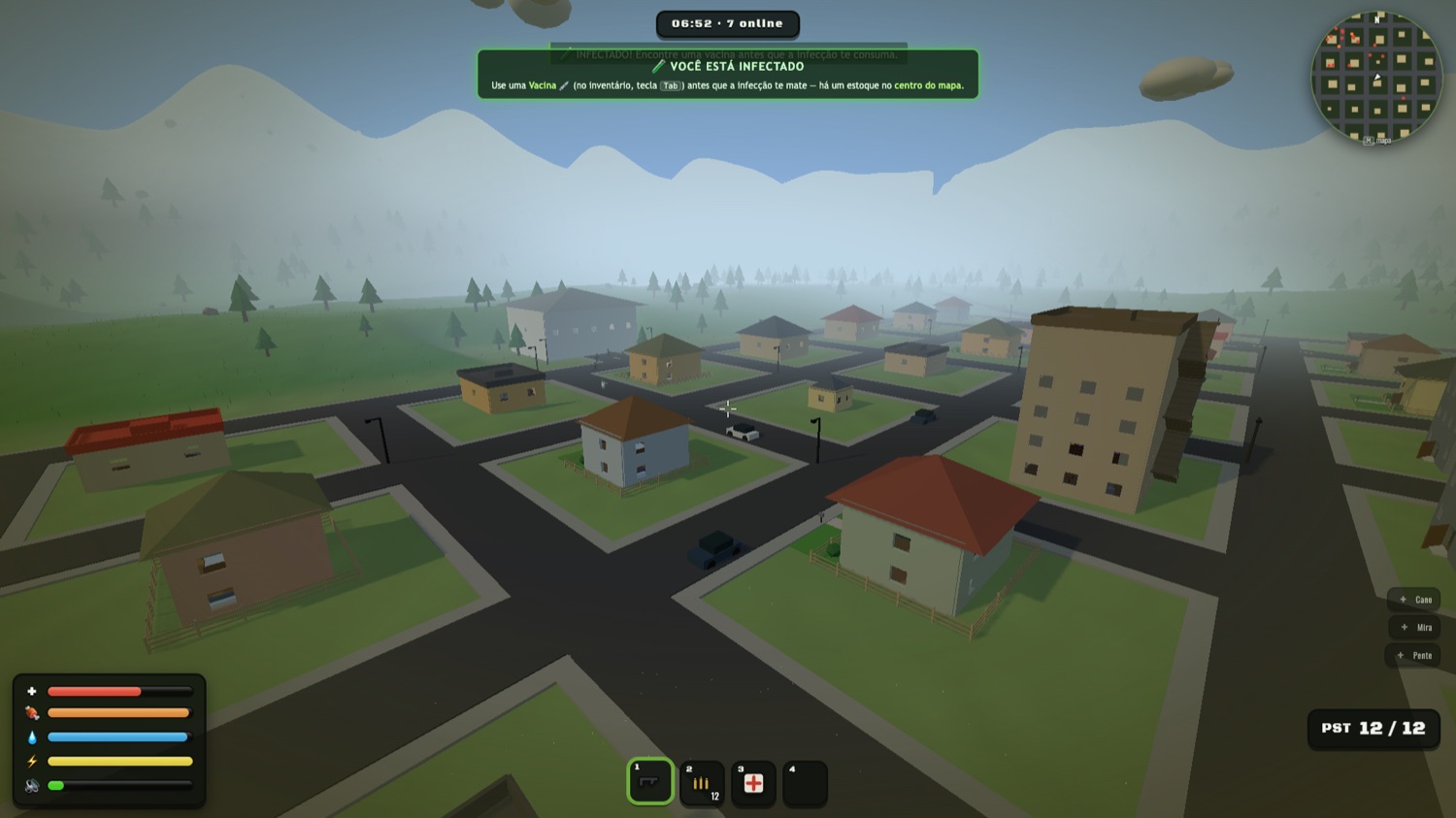
Cars are scattered across the map, with fuel, damage and a speedometer. You
can drive, run zombies over, refuel at a gas station and use the vehicle as
mobile cover — it takes 400 damage before it becomes burning scrap.
Zombies chip the bodywork slowly, so driving through a horde is nearly safe.
From up here you can plan the route — and see who's already down there.
16:30 · late afternoon
The airdrops
Roughly every four minutes a crate of high-tier supplies lands in the open,
marked by a pillar of light visible from anywhere on the map and by a
marker on the minimap. Eight good items inside.
19:50 · nightfall
Night falls
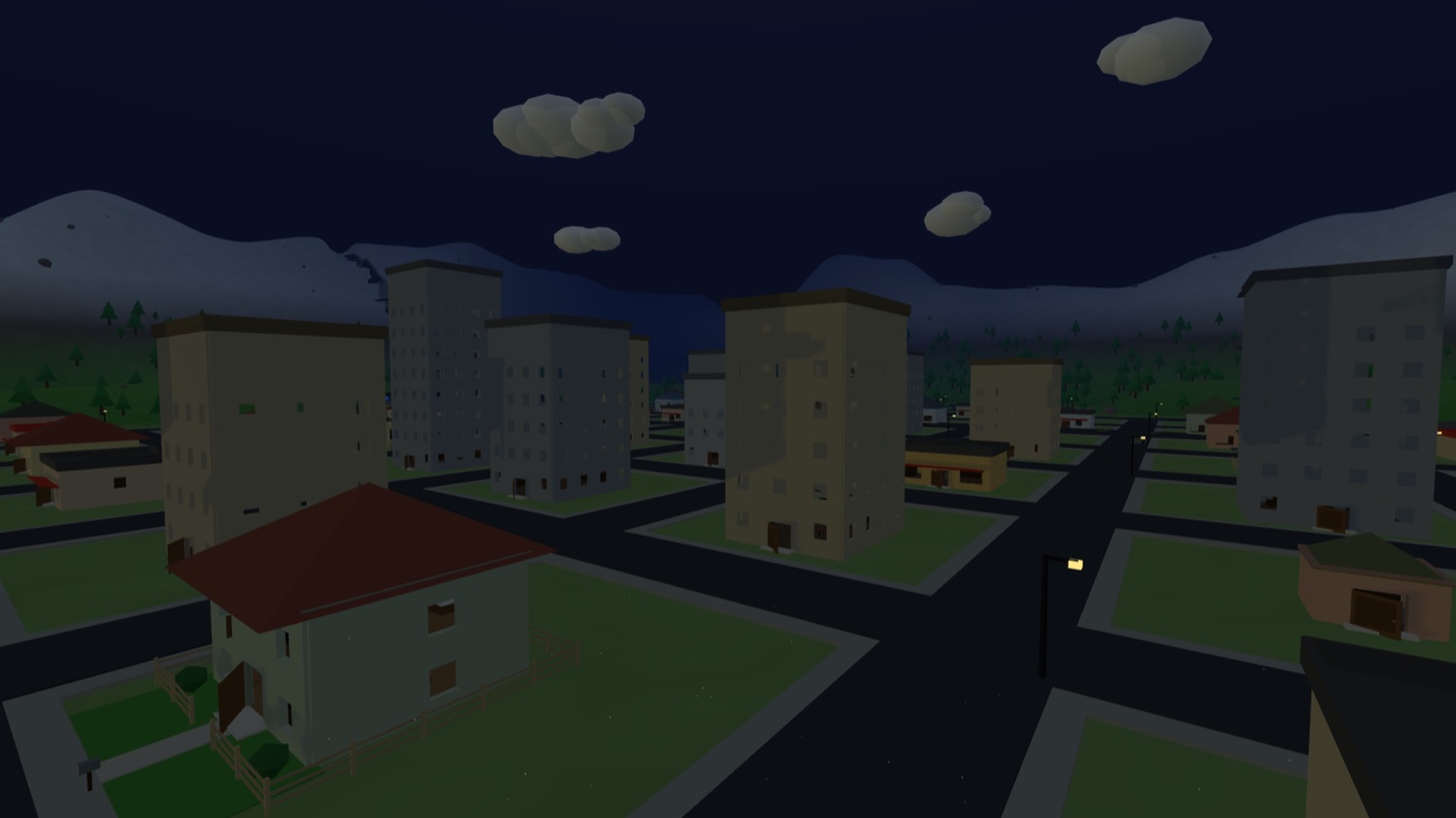
When it gets dark the game changes genre. Horde night turns on three things at once.
+60%zombies per zone
+55%detection radius
+18%chase speed
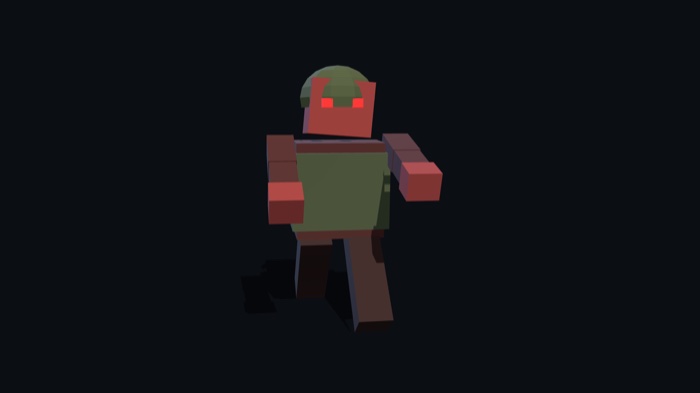
And in the middle of downtown the SUPER zombie is born: an enormous
ash-red thing with glowing eyes that only shows up at night, never more than
two alive at once. Its bite infects 55% of the time — against 22% for
an ordinary zombie.
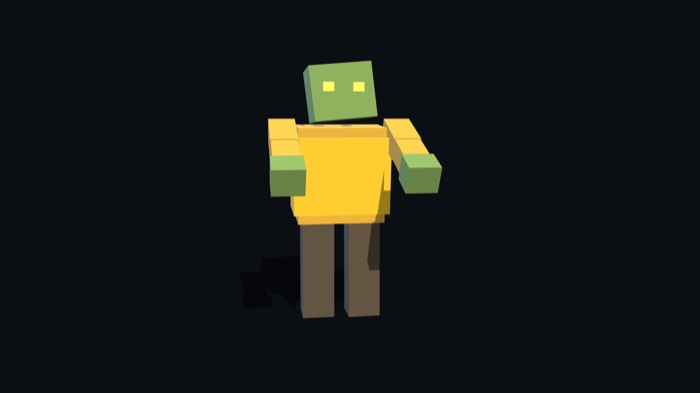
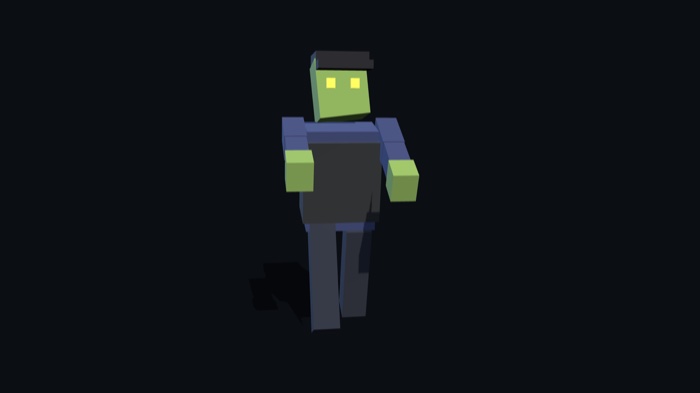
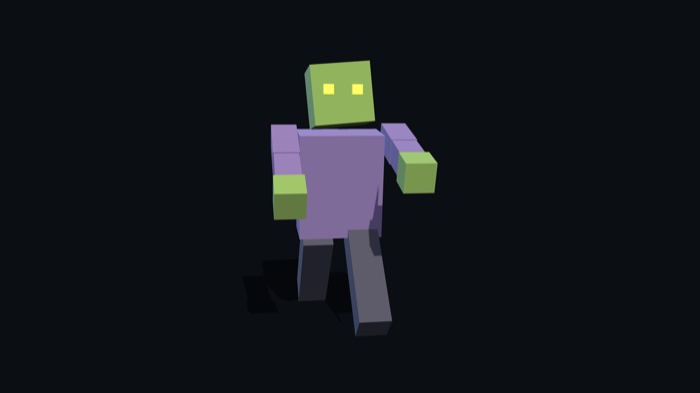
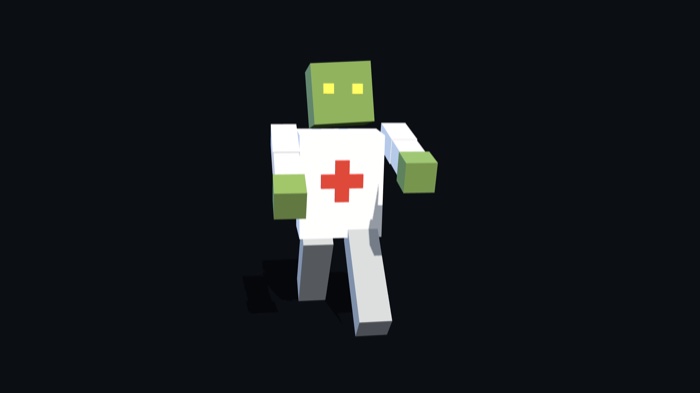
super soldierbrute workerrunner policewalker civiliancrawler hazmatwalker medic
There are five body types — walker, runner, brute, crawler and super —
crossed with six outfits: civilian, worker, police, soldier, medic and
hazmat. Thirty combinations, and each one tells you from a distance what
you're facing, and what it was doing before it became that.
At night your sight line shrinks along with the fog.
22:10 · deep night
The infection
Getting bitten doesn't kill you. It gives you a deadline.
You have 14 seconds of grace before the infection starts eating your
health at 0.7 per second, without pause, until you die. The only cure is a
vaccine, and there is a guaranteed stock at the centre of the map. The screen
takes on a sickly green cast and a permanent warning.
Then you choose: run for the centre through the night, or bet on finding a
vaccine on the way.
dossier
The world
A 900 × 900 map grown from a deterministic seed. Client and server
produce exactly the same world from the same number, so the walls you see are
the walls the zombie bumps into.
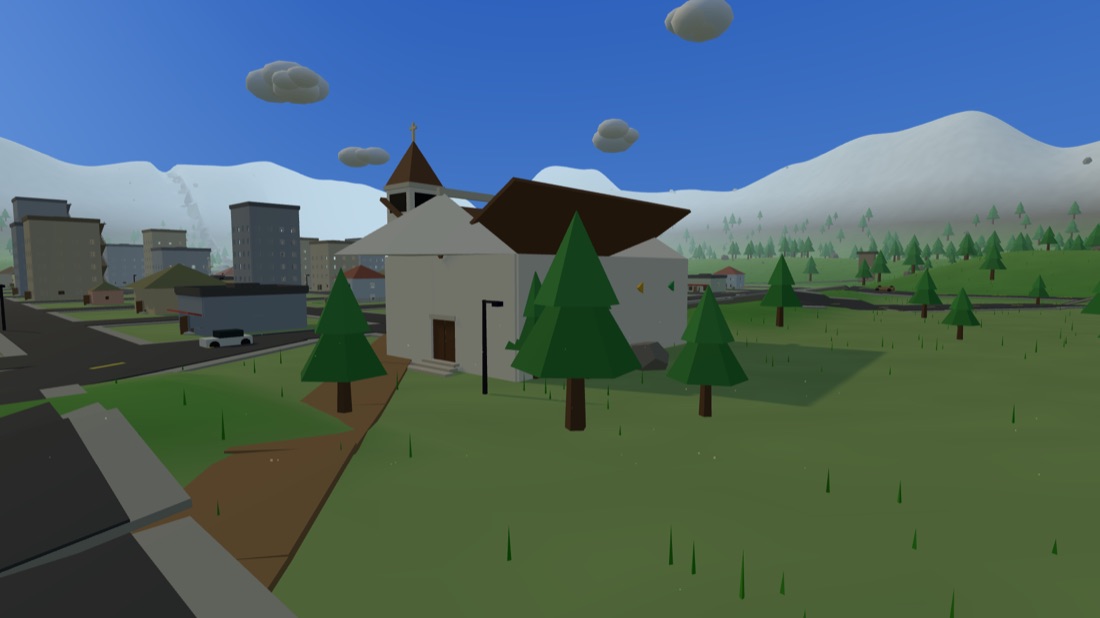
Military baseFarmChurchRiver
Beyond the city and the village, the map holds a hospital, an airport, a gas
station, a weather station, a watchtower, a camp, a valley and a crash scene
on the highway. A river with bridges, lakes, asphalt and dirt roads, dense
forest at the edges and snow-capped peaks on the horizon.
Weather changes on its own: clear spells of 1.5 to 4 minutes, broken by rain
lasting 50 to 130 seconds that darkens everything, pulls the fog in and
changes the ambient sound. The sun rises and sets along a real arc, windows
light up at night, street lamps switch on, police light bars strobe and the
TVs inside houses flicker blue.
dossier
The survivors
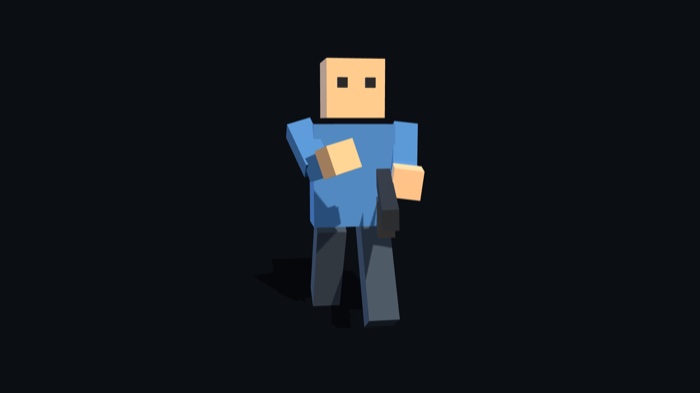
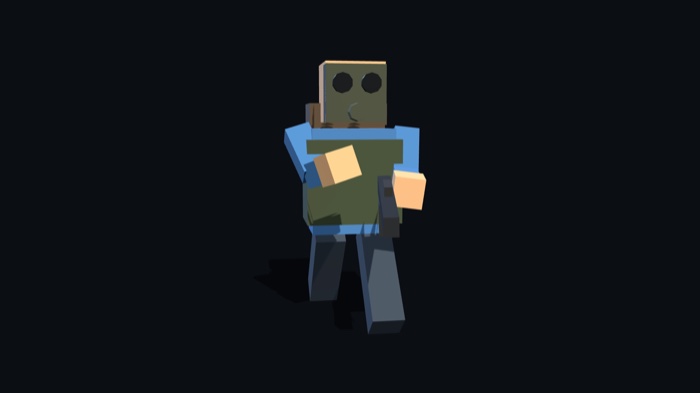
survivorgeared upadmin
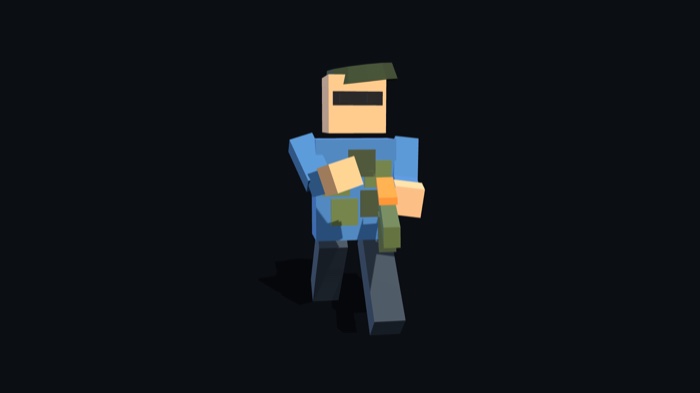
The character is customisable in skin, shirt and trousers, with vest, mask and
backpack visible on the body — you can judge how dangerous another player is
just by looking at them. Their name only appears when you aim at them, inside
a cone of roughly 6°.
dossier
How it's built
The entire world is procedural — no external asset is required. Terrain,
buildings, interiors, cars, trees, characters and weapons are all geometry
generated in code.
The server is authoritative over everything that matters: damage, loot, zombie
AI, fuel and infection. It runs the simulation at 20 Hz, and keeps
running with nobody connected — zombies walk, weather turns, loot respawns.
The client predicts its own movement so it responds instantly, and gets
corrected by a speed clamp.
Rendering
Three.js · WebGL 2 · bloom and vignette
Networking
Colyseus · WebSocket · schema-synced state
Build
Vite
Server
Node.js · Express
Persistence
SQLite — accounts, characters, world edits
Audio
Web Audio API with a spatial panner
The images in this dev log aren't hand-taken screenshots: a harness renders
each scene using the game's real code and a headless Chrome saves the frames.
That way the images can't drift from what the engine draws.